Modest styling
Let AI Build Your Halal Wardrobe With Direct Amazon Links
Modest style works best when the pieces are chosen as a system, not a scramble.
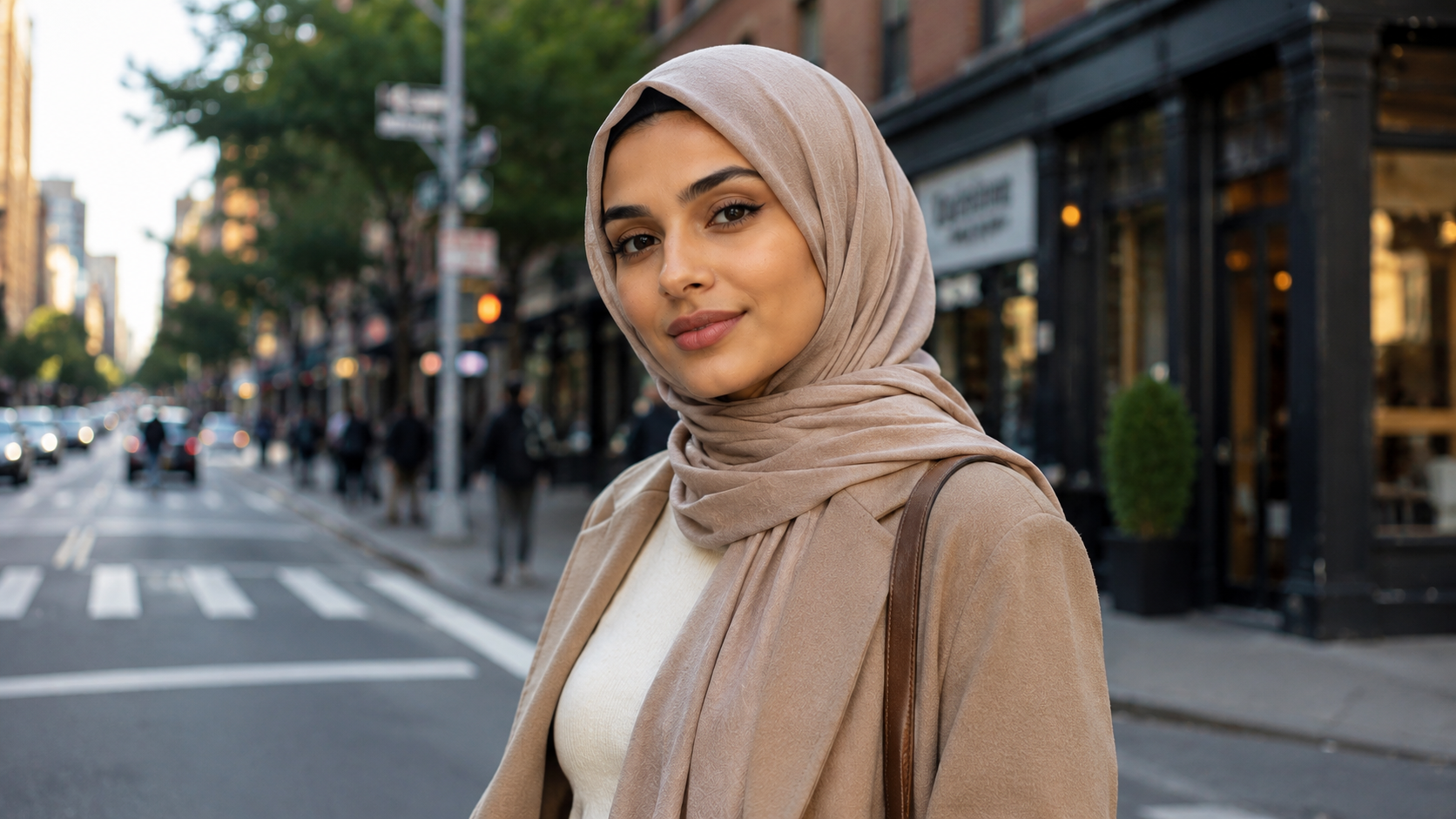
01
Start With Architecture
A halal wardrobe is not a pile of long dresses and emergency cardigans. That’s how you end up with twelve pieces that technically cover you and still somehow make getting dressed feel like a moral and logistical exam. The better approach is simpler: build the outfit architecture first, then shop.
Coverage, opacity, movement, climate, and occasion all have to agree with each other. A dress can be full length and still fail if the fabric clings under daylight. A blouse can look modest on the hanger and pull across the bust the second you sit down. A scarf can be beautiful and make the whole outfit feel top-heavy because the neckline underneath is fighting it.
AI is useful here because modest dressing has a lot of variables. Not vague taste variables. Concrete ones. Sleeve length. Neckline height. Fabric weight. Hem width. Layer count. Shoe proportion. Color contrast near the face. When those are mapped properly, direct Amazon links become less of a rabbit hole and more of a shortlist.
02
Choose The Shape
The first decision is silhouette. Not color. Not print. Silhouette. If the outline is wrong, every pretty detail starts working against you.
For most modest wardrobes, you want three core shapes: column, A-line, and relaxed tailored. The column is your cleanest option: a straight abaya, maxi dress, or long tunic over wide-leg trousers. It reads composed because the eye travels vertically without interruption. The A-line shape gives movement and softness, especially for weddings, Eid dinners, family events, and any room where you’ll be sitting, standing, greeting, and being photographed. Relaxed tailoring is the modern daily uniform: long blazer, fluid trouser, fine knit, opaque shell.
The mechanism is balance. More fabric does not automatically mean more modesty. Excess fabric can create drag, bulk, and strange folds around the waist and hips. A clean shoulder line and enough ease through the torso usually look more modest than an oversized garment trying to hide everything at once. The eye reads intention. It also reads panic.
- Choose column dresses for clean vertical lines and minimal fuss.
- Use A-line skirts when movement matters more than sharpness.
- Pair long blazers with wide trousers for structured coverage.
- Avoid clingy jersey unless it is fully lined or ribbed.
- Check sleeve width so cuffs do not fight your hands.
03
Read The Fabric
Fabric is where a halal wardrobe quietly succeeds or collapses. Photos on Amazon can make polyester crepe look like silk and thin jersey look like ponte. Then the package arrives, the dress is transparent at the knees, and everyone pretends the return label is part of the styling process.
Look for fabric descriptions that signal weight and recovery. Ponte knit is useful for long skirts and trousers because it has structure without looking stiff. Cotton poplin works for shirts and tunics because it holds a line away from the body. Satin can be elegant, but high-shine satin reflects every fold, so choose it for looser pieces rather than fitted ones. Linen blends are excellent in heat if you accept the crease. A linen shirt isn’t casual. A wrinkled one is.
Opacity matters more than thickness. Some heavy fabrics cling. Some lighter fabrics skim beautifully because the weave is tight. This is where AI sorting helps: it can separate pieces that only look modest in a product photo from pieces that have the fiber content, cut, and reviews to back it up.
04
Make Links Useful
Direct Amazon links are only useful if the brief is specific. Otherwise you get a swamp of “modest dresses” with strange belts, mystery sizing, and sleeves designed by someone who has never lifted a glass of water.
A strong AI wardrobe brief should name the use case first. Friday lunch with family is not the same as a graduation ceremony. A work conference is not the same as a wedding reception. Then come your modesty preferences: hijab or no hijab, preferred neck coverage, sleeve length, trouser comfort, layering tolerance, and colors you already own. The AI should also account for your height, climate, and the shoes you’ll actually wear. A maxi dress styled with heels behaves differently with flat loafers.
The direct link matters because it collapses decision fatigue. Instead of scrolling through hundreds of similar items, you receive a small set of pieces that solve a defined outfit problem. Think navy crepe abaya with concealed buttons, ivory opaque shell, taupe block-heel mule, and a matching modal hijab. Not “something elegant.” Elegant is not a shopping instruction.
05
Control The Palette
A halal wardrobe needs color discipline because coverage already gives the outfit visual weight. If every piece competes, the look becomes busy fast. The easiest system is to build around one dark anchor, two soft neutrals, and two accent colors.
For many women, the anchor is black, espresso, deep navy, charcoal, or olive. Black is not the only serious option. Espresso can be softer on warm skin. Navy keeps its shape in daylight and looks less severe in daytime events. Charcoal is elegant, but it can wash out some complexions if the scarf is also grey. Soft neutrals do the smoothing work: ivory, stone, oat, mushroom, taupe, blush beige. Accent colors should flatter the face because hijabs, collars, and upper layers sit close to it. Petrol blue, fig, rust, sage, and deep rose often do more than loud brights.
The mechanism is repetition. A wardrobe feels expensive when colors return in different places. Taupe shoes echo a taupe scarf. A burgundy bag picks up a print in the skirt. Nothing looks accidental.
- Anchor outfits with black, espresso, navy, charcoal, or olive.
- Soften coverage with ivory, stone, oat, taupe, or mushroom.
- Place flattering color near the face, especially with hijab.
- Repeat one accent through scarf, bag, shoe, or print.
- Skip random brights unless the outfit has room for them.
06
Finish The Look
Most modest outfits are won or lost in the last ten percent. Shoes, scarf fabric, bag size, sleeve finish, and underlayers do the quiet labor. They decide whether the look feels intentional or assembled in the hallway.
Shoes should match the weight of the clothing. A long crepe dress can handle a pointed flat, kitten heel, or slim block heel. A heavy cotton maxi skirt needs a more grounded shoe, like a leather loafer, low mule, or clean ankle boot. Tiny sandals under a lot of fabric make the outfit look unstable. The eye wants a base.
Hijab fabric should answer the outfit, not just match the color. Chiffon gives polish and drape for events, but it can slip unless pinned properly. Modal looks softer and more casual, which is excellent for daytime and travel. Jersey is secure and easy, though it can feel too sporty with formal tailoring. Underlayers should disappear: smooth camisoles, opaque long sleeves, and slips in tones close to your skin or the garment. White under black is rarely invisible. It usually announces itself at the worst possible time.
07
Where AI Helps
Fix.Style can take your photos, modesty preferences, event details, climate, budget, and existing wardrobe gaps, then turn them into a styled halal outfit strategy with a practical shopping brief and direct Amazon link direction. The point is not to make you dress like someone else. It is to reduce the noise, protect your standards, and give you a set of pieces that work together before they arrive at your door.